Athletic directors manage hundreds of equipment decisions every year. Most of them are routine. But a handful of recurring failures — predictable, documented, and preventable — quietly drain budgets, trigger injury claims, and end seasons before they start.
Here are the five that cost programs the most. One of them has a solution that's been available for less than a year.
1 Untied and Loose Laces
No item on this list comes close.
Loose laces cause ankle rolls, ACL tears, and concussions from falls — the full spectrum of non-contact lower extremity injuries. Every program has seen it. Mid-play, an athlete's foot catches on their own lace. The ankle rolls. The season might be over. And everyone in the building knew it was coming.
Programs have built workarounds into their DNA: double-knotting protocols, mid-game timeouts for lace adjustments, equipment checks before practice. These aren't aberrations. They're evidence of a design problem that's been accepted as normal for 150 years.
The liability exposure is compounding. Lace-related trip injuries are documented, recurring, and — critically — preventable. When legal teams look at sports injury claims, predictable = expensive.
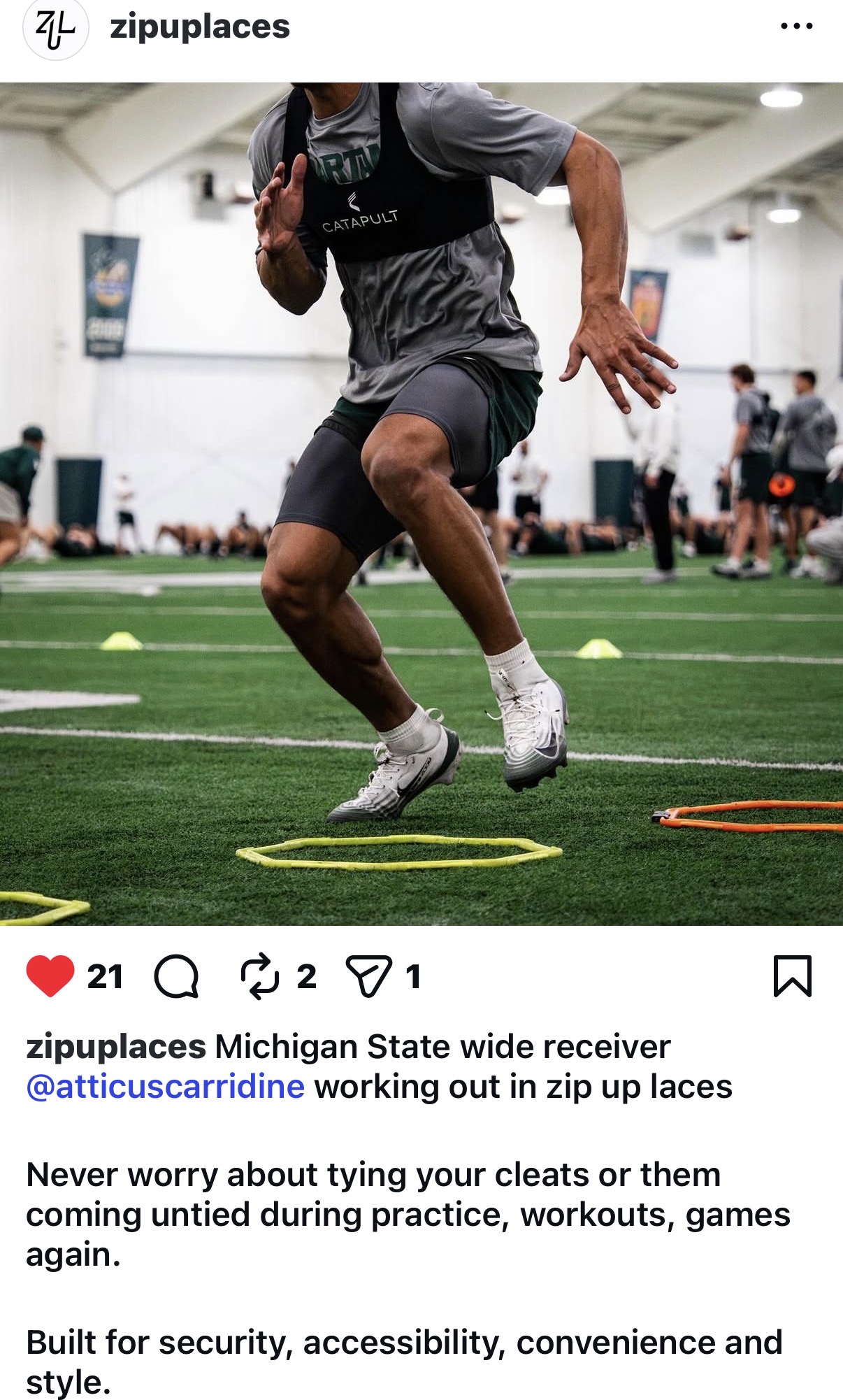
Replace the lace entirely. Zipuplaces is the first closure system engineered specifically so it cannot come undone. Patent-pending mechanism, consistent tension, zero trip hazard. A Michigan State wide receiver wore them in a cleat-change drill without the coaching staff knowing — and won it, outperforming teammates in identical conditions. His assessment: "They don't just change the game, they change the preparation before, during, and after play."
2 Worn-Out Cleats
ACL reconstruction and rehab can run $20,000–$50,000 per athlete, not counting lost scholarship value, roster disruption, and the psychological toll of a 9–12 month recovery.
Research from the American Orthopedic Society for Sports Medicine documents approximately 150,000 ACL injuries in the United States annually. Footwear traction is a documented factor in a significant share of those injuries. A 2023 study in the Foot & Ankle Orthopaedics journal found that very aggressive stud patterns produced significantly more ankle (OR 1.394) and knee injuries (OR 1.595) compared to milder designs.
Worn cleats compound the problem differently: they lose the controlled traction pattern they were designed for, becoming unpredictable. A cleat that was fine on natural grass becomes dangerous on artificial turf as the studs degrade.
Establish documented replacement cycles by sport and surface type. Track wear per athlete, not just per season. Build cleat audits into pre-season equipment checks — and document them. Documentation matters when claims arise.
3 Ill-Fitting Helmets
A landmark 9-year study published in Sports Health (covering 4,580 athletes from 2005–2014) found a direct link between improper helmet fit and concussion severity. Athletes with ill-fitting helmets experienced more symptoms and longer recovery times. The finding was significant enough that the National Federation of State High School Associations (NFHS) added a helmet fit rule targeting the problem.
The mechanism is straightforward: a helmet that shifts on impact doesn't absorb force the way it was designed to. The padding system assumes contact with a specific area of the skull. Misalignment degrades protection.
Budget-constrained programs often extend helmet lifecycles beyond NOCSAE certification windows, delay recertification, or accept donated helmets that are out of certification. Each of these is a documented liability risk.
Conduct mandatory mid-season helmet fit checks — not just pre-season. Track helmet age and certification status in an equipment management system. Never deploy donated helmets without verifying NOCSAE certification. Consider the cost of one concussion lawsuit against the cost of a helmet replacement cycle.
4 Old and Ill-Fitting Mouthguards
Dental injuries are expensive and permanent. A fractured tooth costs $1,000–$5,000+ to restore. Maxillary fractures involve oral surgery. Avulsed (knocked-out) teeth require implants averaging $4,000–$6,000 per tooth. Unlike most sports injuries, dental injuries don't heal — they require permanent restorative work.
The compliance problem is well-documented. Athletes resist mouthguards for comfort and speech reasons. Stock and boil-and-bite guards degrade quickly — the material loses shape, becomes loose, and stops providing the jaw positioning that custom guards are designed for. Many athletes wearing degraded mouthguards believe they're protected when they're not.
The NFHS mandates mouthguards in football, ice hockey, field hockey, and lacrosse. But research from the American Academy of Pediatric Dentistry shows compliance remains inconsistent — coaches don't enforce fit standards, only presence.
Replace stock mouthguards annually. Establish fit-check protocols — a guard that no longer maintains firm contact with teeth isn't providing protection. For high-contact programs, advocate for custom-fitted guards: they cost $200–$500 per athlete but outperform boil-and-bite on protection and compliance (athletes actually wear them because they're comfortable).
5 Degraded Shoulder and Knee Pads
Foam degrades. The high-density foam in shoulder pads and knee pads has a functional lifespan — after enough impacts and compression cycles, it no longer rebounds to full thickness. A pad that looks intact can be providing 40–60% of its original impact absorption.
The problem is invisible. Coaches and ADs see equipment that appears fine. Athletes feel protected. The degradation only becomes obvious after an injury that the pad should have prevented.
Shoulder separation and AC joint injuries — common in football and lacrosse — frequently occur when padding has degraded beyond its protection threshold. Knee contusions and bone bruises follow the same pattern.
Implement impact-testing protocols for high-use pads. Most manufacturers publish compression-cycle lifespans for their padding systems — build equipment audits around those specs, not just visual inspection. Track cumulative use per pad, not just per season.
The Pattern Behind All Five
Every failure on this list shares a structure: the equipment appears functional, the problem is invisible until it isn't, and the cost arrives as an injury claim, insurance premium increase, or career-ending event for an athlete.
Athletic directors can't eliminate all risk. But they can eliminate the predictable risk — the kind that shows up in legal filings as "the school knew, or should have known."
That starts with equipment audits. Documented replacement cycles. And for the most stubborn problem on the list — the one that's been unsolved for 150 years — there's finally a direct solution.
Eliminate the #1 equipment failure in your program
Request a free Zipuplaces sample for your athletic program. We'll follow up within 24–48 hours.
Request Free Sample →Wholesale pricing available · Patent Pending · D1 validated